|
-
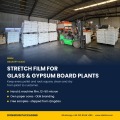
Glass and gypsum board are heavy, fragile and sensitive to moisture. Once they leave the production line, the packing has one job: get every pallet or rack to the customer square, clean and dry. Stretch film does most of that work, and the right film makes a real difference to damage rates and packing cost.At Dongrun Packaging, glass factories and gypsum board plants are two of our biggest customer groups in China. Here is what we have learned from supplying them.Why gypsum board needs good wrap
-
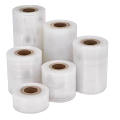
The right choice depends mainly on how many pallets you wrap per day. Under about 30 pallets, hand stretch film is usually cheaper overall. Above that, machine stretch film saves film, labor and time.Both are made from LLDPE and do the same job: holding goods tightly on a pallet during storage and transport. But they are produced, packed and used differently. Picking the wrong type means paying for film you waste, or for labor you don't need.What is hand stretch film?Hand stretch film is wra
-
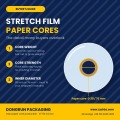
When buying stretch film, most buyers focus on thickness, stretch rate and price, but often overlook the paper core inside the roll. In fact, core quality directly affects both performance and real cost.First, consider core weight. Stretch film is usually priced by roll weight, so the heavier the core, the less film you actually receive. Reliable manufacturers state both net weight and gross weight. Hand film cores typically weigh 0.2–0.5 kg, while machine film cores are slightly heavier. Alway
-
Stretch film, also known as stretch wrap, is one of the most widely used pallet packaging materials in logistics and warehousing. Made mainly from LLDPE (linear low-density polyethylene), it offers high stretchability, strong cling and good clarity. It protects goods from dust and moisture and keeps loads from shifting during transport.Stretch film comes in two main types: hand film and machine film. Hand stretch film is light, usually 2–5 kg per roll, and is applied manually. It is flexible an
|
|